
When an air conditioner stops cooling properly, makes an unusual noise or starts leaking water, getting it repaired becomes a priority. But before booking a technician, most homeowners have one common question: how much will the repair cost?
The answer is not always the same. A minor issue, such as a blocked drain pipe, may require a simple repair, while a faulty compressor or damaged electronic component can involve more work and replacement parts.
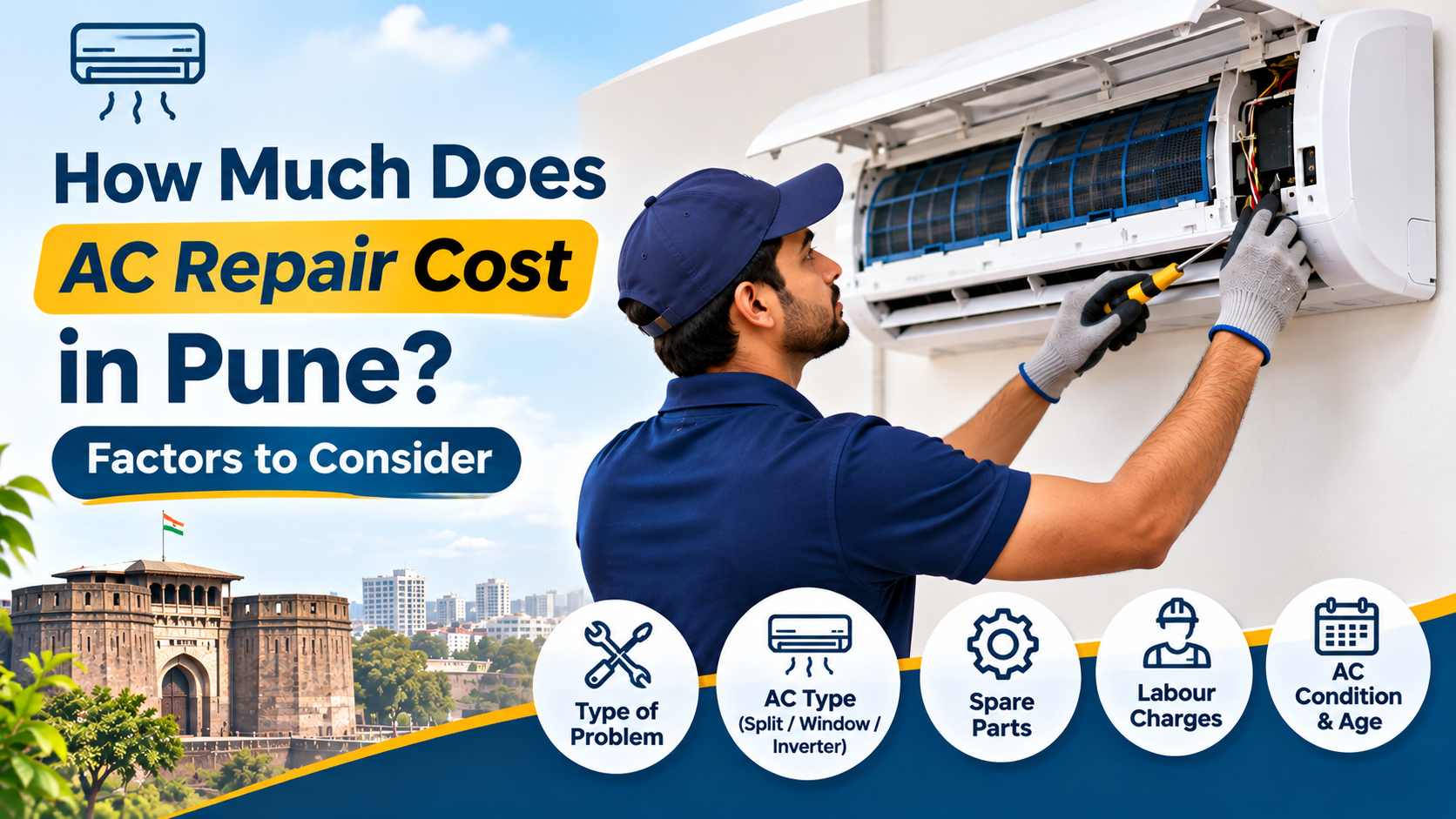
The AC repair cost in Pune depends on several things, including the type of problem, AC model, spare parts required, technician charges and the time needed to complete the repair.
In this guide, we explain the main factors that affect AC repair charges, common problems that may need attention and what to check before approving a repair.
Quick Answer: What Determines AC Repair Cost in Pune?
AC repair cost in Pune depends on the fault, type and model of the AC, parts required, labour, accessibility and time needed for the work. A technician should inspect the unit and provide a clear estimate before starting the repair. There is no single price that applies to every AC problem.
1. Why Does AC Repair Cost Vary?
Two air conditioners can show similar symptoms but need completely different repairs.
For example, if your AC is not cooling, the reason could be a dirty filter, poor airflow, a refrigerant leak, a faulty sensor or a problem with the compressor. Each issue requires a different inspection and repair process.
Here are some common factors that influence the final bill:
- Type of fault: Minor cleaning or drainage issues generally require less work than major electrical or mechanical faults.
- Spare parts: The price depends on which component needs replacement and whether the part is available.
- AC type: Split AC, window AC and inverter AC models have different designs and repair requirements.
- Labour: The time, technical skill and effort required can affect service charges.
- Accessibility: Difficult outdoor-unit locations or complicated pipe routes may require additional work.
- Age of the AC: Older models may need parts that are harder to find or more expensive to source.
This is why it is better to get the AC inspected before relying on a fixed repair estimate.
2. Common AC Problems That Affect Repair Charges
Understanding the problem can help you have a more useful conversation with the technician. The symptoms below are common, but the actual cause should be confirmed through inspection.
AC Is Not Cooling Properly
An AC that runs continuously but does not cool the room can have several possible causes.
A dirty air filter or blocked indoor-unit coil may restrict airflow. Other possibilities include refrigerant leakage, a faulty sensor, an outdoor-unit problem or a compressor-related issue.
The repair cost depends on what the technician finds. Cleaning may be sufficient in some cases, while a refrigerant leak requires locating and repairing the leak before the system is recharged according to the manufacturer’s specifications.
Read our guide to 10 common reasons an AC is not cooling for more information.
AC Is Leaking Water
Water dripping from the indoor unit is another problem homeowners frequently report.
Possible reasons include:
- A blocked drain pipe.
- Incorrect drainage pipe slope.
- Dirt accumulation around the drainage system.
- Frozen evaporator coil.
- Damaged or disconnected drain components.
A simple drainage blockage may need cleaning, but repeated water leakage should be investigated to identify the actual cause. See our guide to common causes of AC indoor-unit water leakage.
AC Is Making Unusual Noise
A buzzing, rattling or grinding sound should not be ignored.
The noise may come from a loose panel, a fan problem, vibration, a damaged motor or another internal component. The technician will need to inspect the unit before recommending a repair.
The final cost depends on whether the issue can be corrected by tightening or adjusting a component or whether a replacement part is necessary.
AC Is Not Switching On
If your AC does not start, the issue may be related to the power supply, remote control, circuit protection, wiring, control board or another electrical component.
Avoid repeatedly switching the unit on and off if you notice burning smells, sparks or signs of electrical damage. Turn off the power supply when it is safe to do so and arrange a professional inspection.
Electrical repairs should be handled by a qualified technician.
AC Is Switching On and Off Frequently
An AC that starts and stops repeatedly may have an airflow restriction, thermostat or sensor issue, electrical fault or an incorrectly sized system for the room.
The technician should check the operating conditions and identify the cause rather than immediately replacing a component.
3. Does the Type of AC Affect Repair Cost?
Yes. Different AC types have different components, designs and service requirements.
| AC type | What may affect repair charges |
|---|---|
| Split AC | Indoor and outdoor unit inspection, copper piping, drainage and electronic components. |
| Window AC | Compact component arrangement, fan, motor, thermostat and cooling-system issues. |
| Inverter AC | Inverter PCB, sensors, electronic controls and model-specific components. |
| Non-inverter AC | Compressor, capacitor, thermostat, fan motor and electrical components. |
For example, an inverter AC may require a technician familiar with its electronic control system. If its PCB is faulty, the cost will depend on the exact model and whether repair or replacement is appropriate.
Similarly, a split AC with an outdoor unit installed in a difficult-to-access location may need additional time and equipment for inspection.
Do not assume that all AC models have the same repair charges, even when they belong to the same brand.
4. How Spare Parts Influence AC Repair Cost
Spare parts can make a noticeable difference to the final repair bill.
Some problems can be resolved without replacing any major component. Others require a new part, and the price may vary depending on the brand, model, availability and specifications.
Common components that may need attention include:
Capacitor: A faulty capacitor can affect the operation of certain motors or compressors. Whether replacement is required depends on the diagnosis.
Fan motor: Problems with the indoor or outdoor fan motor can affect airflow and heat exchange.
PCB (Printed Circuit Board): The control board manages different AC functions. Repair or replacement costs depend on the model and the nature of the fault.
Temperature sensor: A faulty sensor can affect temperature readings and system operation.
Compressor: Compressor-related repairs can be more involved. The technician should confirm the fault and explain whether repair or replacement is practical.
Before approving a replacement, ask for the part name, price and reason it needs to be changed. If the part is covered by a valid manufacturer warranty, check the warranty conditions before paying for it.
5. Does the AC Brand and Model Matter?
Yes. The brand and model can influence the availability and price of spare parts.
Some models use components that are readily available, while others may require specific parts that need to be ordered. Inverter and newer models may also have specialised electronic components.
When booking an AC repair service, keep the following information ready:
- AC brand.
- Model number.
- Approximate age of the unit.
- Type of AC.
- Description of the problem.
- Any error code shown on the display.
A photo of the model information label can also help the technician identify the correct equipment.
Providing these details does not replace an inspection, but it can make the initial discussion more productive.
6. How Pune’s Conditions Can Affect AC Maintenance and Repairs
Pune experiences changing weather conditions throughout the year. During warmer months, ACs may run for longer hours, while dust from nearby roads, construction and everyday household activity can collect on filters and coils.
These conditions do not automatically mean that your AC will need an expensive repair. However, they make regular inspection and cleaning important.
A few situations worth watching include:
- Dust accumulation: Dirty filters can restrict airflow and affect cooling.
- Heavy usage: Long operating hours can increase wear on components.
- Outdoor-unit exposure: Dust and debris around the condenser can interfere with heat exchange.
- Drainage problems: Dirt accumulation can contribute to blocked drain pipes.
- Poor maintenance: Ignoring small warning signs can allow certain problems to become more complicated.
For homeowners in areas such as Baner, Wakad, Hinjawadi, Kothrud, Hadapsar and other parts of Pune, the repair requirement will still depend on the AC’s condition and the actual fault, not simply the area where it is installed.
7. What Should You Check Before Approving an AC Repair?
A clear repair estimate helps you understand what you are paying for. Before the technician begins the work, ask a few straightforward questions.
Ask for the Actual Problem
Do not settle for a vague explanation such as “gas problem” or “PCB problem.” Ask the technician what they inspected and what evidence indicates that a component is faulty.
For example, if refrigerant is suspected to be low, ask whether a leak has been checked. Simply adding refrigerant without addressing a leak may not solve the underlying problem. Learn more about signs of low refrigerant and AC gas filling.
Request a Cost Breakdown
Ask whether the estimate includes:
- Inspection or visit charges.
- Labour charges.
- Spare-part cost.
- Additional materials.
- Refrigerant-related work, if required.
- Taxes and other applicable charges.
This makes it easier to compare estimates from different service providers.
Confirm the Spare Part Details
If a component needs replacement, ask whether it is an original manufacturer part, an approved compatible part or another alternative. Also ask about the warranty on the replaced component.
Ask About the Repair Warranty
Some service providers offer a limited warranty on particular repairs or replacement parts. The duration and conditions can vary, so request the details in writing.
Avoid Unnecessary Replacements
If the technician recommends replacing an expensive component, ask why repair is not a suitable option. For major repairs, getting another professional opinion can help you make a better decision.
8. Is It Better to Repair an Old AC or Replace It?
Sometimes, repairing an older AC is the sensible choice. In other situations, replacement may be worth considering.
The decision depends on the overall condition of the unit rather than its age alone.
Consider these points:
- Repair frequency: Has the AC needed repeated repairs in recent months?
- Repair expense: Is the estimated repair cost high compared with the value of the unit?
- Cooling performance: Does the AC still cool the room effectively after repairs?
- Energy consumption: Is the unit consuming more electricity than expected?
- Spare-part availability: Can the required parts still be sourced?
- Warranty: Is any part of the repair or replacement covered under warranty?
For example, spending money on a minor drainage repair may be reasonable even for an older AC. But if the unit has repeated major failures and needs an expensive compressor replacement, comparing the repair estimate with the cost of a new AC is a sensible step.
Ask the technician to explain the condition of the complete system before making the decision.
9. How to Avoid Unexpected AC Repair Expenses
You cannot prevent every AC problem, but a few habits can help reduce avoidable repair issues.
- Clean the filters regularly: Follow the manufacturer’s instructions for cleaning or replacing filters.
- Keep the outdoor unit clear: Avoid storing objects around it or blocking its airflow.
- Schedule periodic servicing: Inspection and cleaning can help identify developing issues.
- Do not ignore unusual sounds: Get persistent rattling, buzzing or grinding checked.
- Respond to water leakage: Continued leakage can damage nearby walls or furniture.
- Use the correct settings: Operate the AC according to the manufacturer’s guidance.
- Keep service records: Save invoices and repair details so future technicians can understand the unit’s history.
Small maintenance steps can help keep your AC in better working condition and make it easier to identify problems early. For simple upkeep, see how to clean an AC filter safely at home.
10. Choosing an AC Repair Service in Pune
Finding a technician is easy, but choosing someone who explains the problem and provides a clear estimate is more important.
Before booking an AC repair service in Pune, consider the following:
- Check whether the technician has experience with your AC type and brand.
- Ask whether inspection and visit charges apply.
- Confirm whether the estimate will be shared before additional work.
- Check the warranty offered on repairs and replacement parts.
- Ask whether the service provider can explain the fault and repair process.
- Keep the invoice and payment record after the job is completed.
A good repair experience should not leave you confused about what was repaired or why you were charged a particular amount.
For homeowners looking for AC repair in Pune, explore our AC services and Pune service area information before making an enquiry.
Conclusion
The AC repair cost in Pune depends on the actual fault, AC type, spare parts, labour and complexity of the work. A drainage blockage or minor electrical issue is different from a compressor or PCB replacement, so there is no single repair price that applies to every AC.
Before approving any repair, ask for a proper diagnosis, a clear cost breakdown and details about the replacement parts and repair warranty. If the AC is old or has recurring problems, compare the repair estimate with the cost of replacing the unit.
Understanding these factors will help you make a more informed decision and avoid paying for work that has not been properly explained.
Frequently Asked Questions
1. What is the AC repair cost in Pune?
The cost depends on the type of AC, the problem, labour charges and whether any spare parts need replacement. A technician should inspect the unit and provide an estimate before starting the repair.
2. Why is my AC running but not cooling?
Possible reasons include dirty filters, blocked coils, refrigerant leakage, fan problems, sensor faults or compressor-related issues. A proper inspection is needed to identify the cause.
3. Is AC gas filling included in normal AC repair?
Not necessarily. Refrigerant-related work may be charged separately depending on the service and the problem. If refrigerant is low, the technician should check for leakage and address the cause rather than simply adding more refrigerant.
4. Is it worth repairing an old air conditioner?
It depends on the repair cost, overall condition, energy consumption, spare-part availability and how frequently the AC breaks down. Compare the repair estimate with the cost of a suitable replacement before deciding.
5. How can I avoid high AC repair charges?
Clean the filters regularly, keep the outdoor unit unobstructed, arrange periodic maintenance and address unusual noises, water leakage or cooling problems early. Always request a clear estimate before approving repairs.